


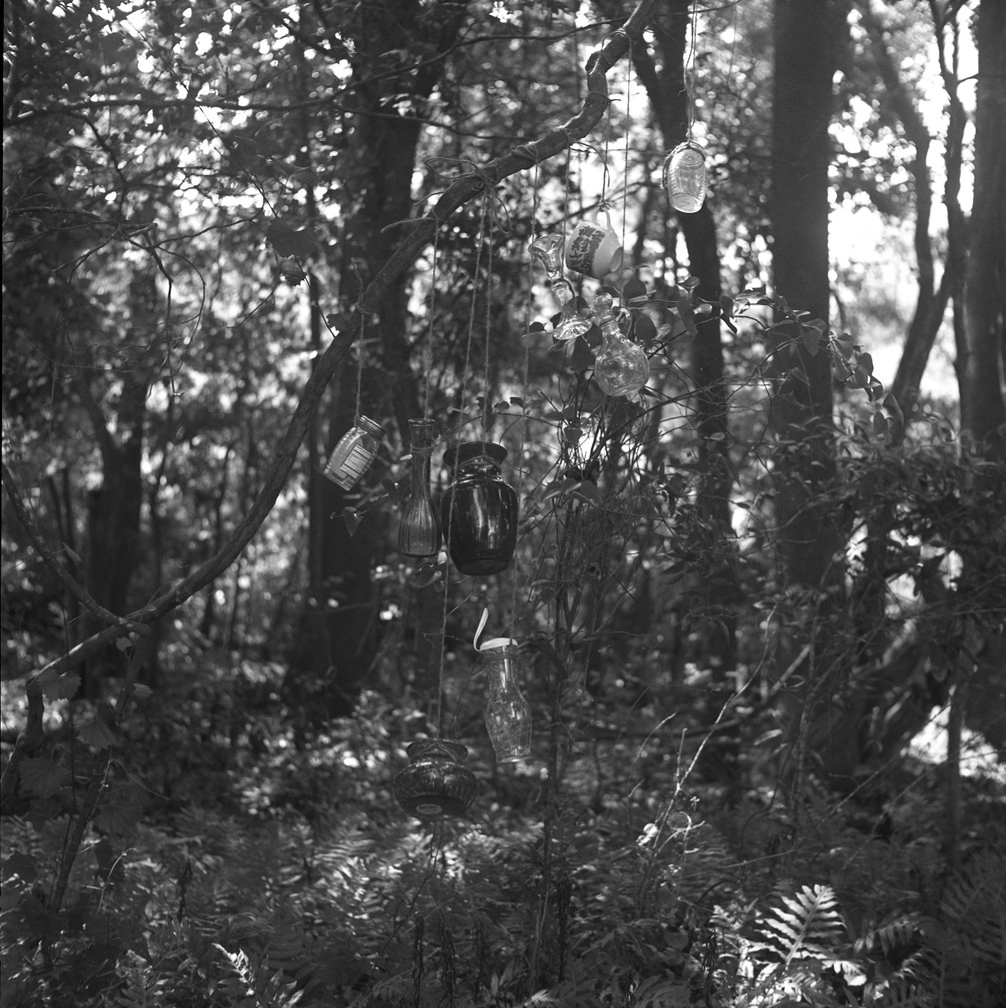
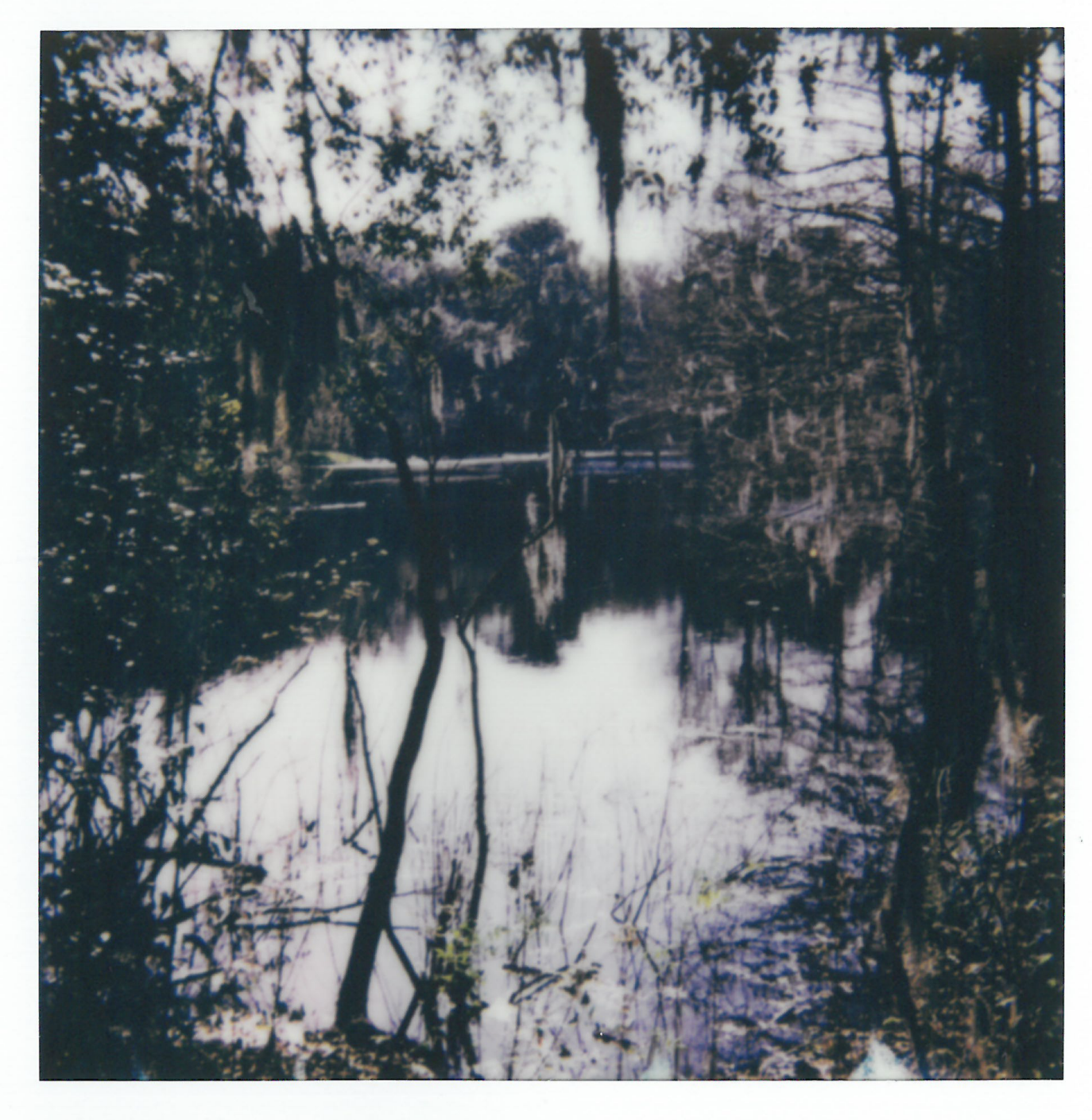
Introduction
This work explores the dream world as an active space of receiving ancestral messages, and dream interpretation as an ancestral technology within the Black Diaspora. I move through Gullah dream histories and personal and familial memory as a Gullah person who grew up in the Sea Islands of South Carolina. In this work, I also address and move through Bakongo cosmology and its relationship to Gullah history, culture, and spirituality; oral transmissions; my herbalism practice and my dream-related radio and sound work; and the material infrastructures of artificial intelligence (AI). The piece asks how dream practices, shaped through land, water, lineage, bodies, and community, can support ways of living amid the ecological, social, and spiritual ramifications of artificial intelligence.
I write through personal stories, critical reflections, dream accounts, herbal practices, accompanied by oral and sound-related work. The flow and structure of the paper is a reflection of these forms living within and alongside one another. Together, these forms attend to a counter-movement that critically reflects on AI-related infrastructures and reliances such as data centres, extraction, displacement and internet sea cables, attending to the ghosts that exist alongside them, and to communal forms of listening and pattern recognition. The supplementary Dream Portal includes longer dream accounts, workshop material, and herbal notes that continue the written work through spoken, relayed accounts.
The article begins in the dream world, defining how it is a space that is both private and communal or shared, and moves outward to Gullah dream histories and how those practices are in relationship to Bakongo cultural spiritual practices and the Kalunga line, looking to these practices and tracing the ways in which dream symbols morph and shift across waters, across geographies. Alongside this geographic movement, the paper follows my personal and familial relationships to dreaming as a Gullah person, and how my herbal and sonic practices relate to communal dreaming and support others in connecting with their dream lineages. The threads of Gullah history, critical reflection and familial accounts confront the infrastructures of artificial intelligence, asking how dreams come into contact with the artificial interface of AI platforms such as ChatGPT.
Throughout the paper, I refer to dreams and dream interpretation as an ancestral ‘technology.’ I define technology here as tools that support the growth, expansion and ongoingness of being and knowing. I refer to the technology of dreams as a language and fertile ground. Dreams are a language composed of symbolic meaning, geographic context and also function as a tool of remembrance, a bridge space which connects, documents, disperses, unpacks and stores information between planes. I see this definition as useful and productive for framing and understanding dream technology in conversation with the man-made, fabricated technology of the AI chatbot.
By adopting a personal voice and drawing on family history and lineages of dream interpretation, this article foregrounds the political possibility of storytelling and lived experience through the history of the Gullah Praise House and contemporary dreaming practices. Drawing on Christina Sharpe’s (2016) attention to the personal as a means to understand historic violence, Saidiya Hartman’s assertion of the importance of the possibilities of what lies beyond the archive, and the impossibility of the archive to hold histories of slavery (2007; 2008), and Toni Morrison’s 1977 text, Song of Solomon, which deeply explores Black interiority and references The People Who Could Fly, an African American folktale based on the history of Igbo Landing, this article navigates forms of knowing through the dream. Foregrounding personal voice pushes for engagement with lived forms of knowing, with a recognition that these are at times tenuous and irreconcilable.
Dream world, memory, imagination, collectivity
Our dream worlds are spaces that are often thought of a space of privacy, a final landscape of personal space, one where we can control who has access to that space and the information and symbols held therein. However, this privacy is complex, and in this paper I explore how dreams may be simultaneously private, yet may also be shared, co-dreamed, shaped by touch, spirits, family and friends, place, television, news, social media, and the events that enter our bodies while awake.
We can also confabulate, filling in the gaps, unconsciously rewriting or recreating memory when we recount our dreams to others and to ourselves. Yet the dream remains in the ephemera of the body and spirit, for our even deeper knowing beyond the knowing of our conscious mind, existing in a deep well space. Even with confabulation in mind, our dreams are ours. Our memories of our dreams are ours, the voice that we use to share the imagery, the smells that we felt in that space when we tell others our dreams – our special way of sharing – this is ours.
There is the personal “ours” and the collective “ours”. Dream interpretation is often rooted in a commonality and in geographic and culturally shared dream symbols. A common dream symbol that is shared throughout the Black African Diaspora that represents fertility is fish. I grew up with this symbol predicting pregnancy, and dreamt of fish before my sister’s pregnancy, and the pregnancies of several close friends. It was through travelling to Jamaica and Cuba and learning about the Orisha Yemoja1 that I was able to connect this local symbol of the fish and pregnancy – local to where I grew up in Beaufort, South Carolina – to a larger Black Diaspora of spiritual connection to Yemoja (author’s family oral history, Beaufort, South Carolina, ongoing). Yemoja is the Orisha of the upper layer of the ocean who is a matriarchal, protective force of the rights of women, and has a connection with fertility.2 Yet even within common geographies, family lineages and households, dream symbols can be highly specific to the individual and the message that is meant for them to receive.3
Co-dreaming with friends and cousins
When I was between the ages of seven and eleven, I was really excited by the idea of co-dreaming. I fantasised about opening up my dream space and entering others’ dream spaces. My cousins, friends, and I would set intentions and write spells, often influenced by supernatural or occult shows we had seen on television, but also by prayer and the Baptist church influences in our family. These spells would help us meet each other in the dream world and go on adventures. We would murmur them together before heading off to sleep, looking at one another seriously and with feelings of anticipation for what was to come in the dream realm. Where would we meet, what would we do, how would we appear? During the day we would take walks through wooded areas, across ponds, tell stories about snakes, and often return to our grandmother’s house. She would have a friend or visitor, and they would often be talking about dreams, what they meant, and whether they signified someone passing away or the coming of money.
I grew up on the Sea Islands of South Carolina, and am Gullah,4 and within my family, dreams, dream symbols, and their significance was a consistent presence. We often talked about the dead coming to our dreams with messages, and how to engage with them when they were present. We talked about how dreams predicted new births within the family, visitors who would be coming, and other forms of predictions and warnings that may appear in the dream space. Dream symbols such as fish predicted pregnancies, coffins and weddings signalled death. We were taught not to accept gifts, food, or touch from people in the dream world because we may not know the source, and they may not be beneficial to our health or well-being. This upbringing taught me to frame the dream space as an open line of communication where ancestral messages could be received, and could serve a collective or your closest communities. Messages received through the dream realm were not only for the individual dreaming but could also be received to communicate with those around the dreamer, making the dream space both a private, intimate encounter and one with collective stakes.
Dreams, therefore, are both personal and collective. Symbols exist as a way for communities to receive shared messages from the land, ancestors, and spiritual forces with which they connect. I often think of dreaming as an ancestral technology. Dreams are a tangible technological practice for connecting with ourselves, our ancestors, the world around us, and others, a system for receiving symbols and shared messages. Dreams can be quite visually stunning, even nightmares. Dream interpretation, as a practice of reading and analysis, can be viewed as a technology that creates vocabularies for understanding these symbols. When we collectively tend to our dream worlds, we also collectively tend to our nervous systems and rest. Many of the dreams I experience are messages that support my family with information needed for familial well-being, critical medical information about something going on with a family member, and sometimes ancestral memories. The dream space is a space of processing our day-to-day – what we are ingesting through conversation, reading, film, news, and social media outlets, and a space for processing collective curiosity and grief.
Kalunga line
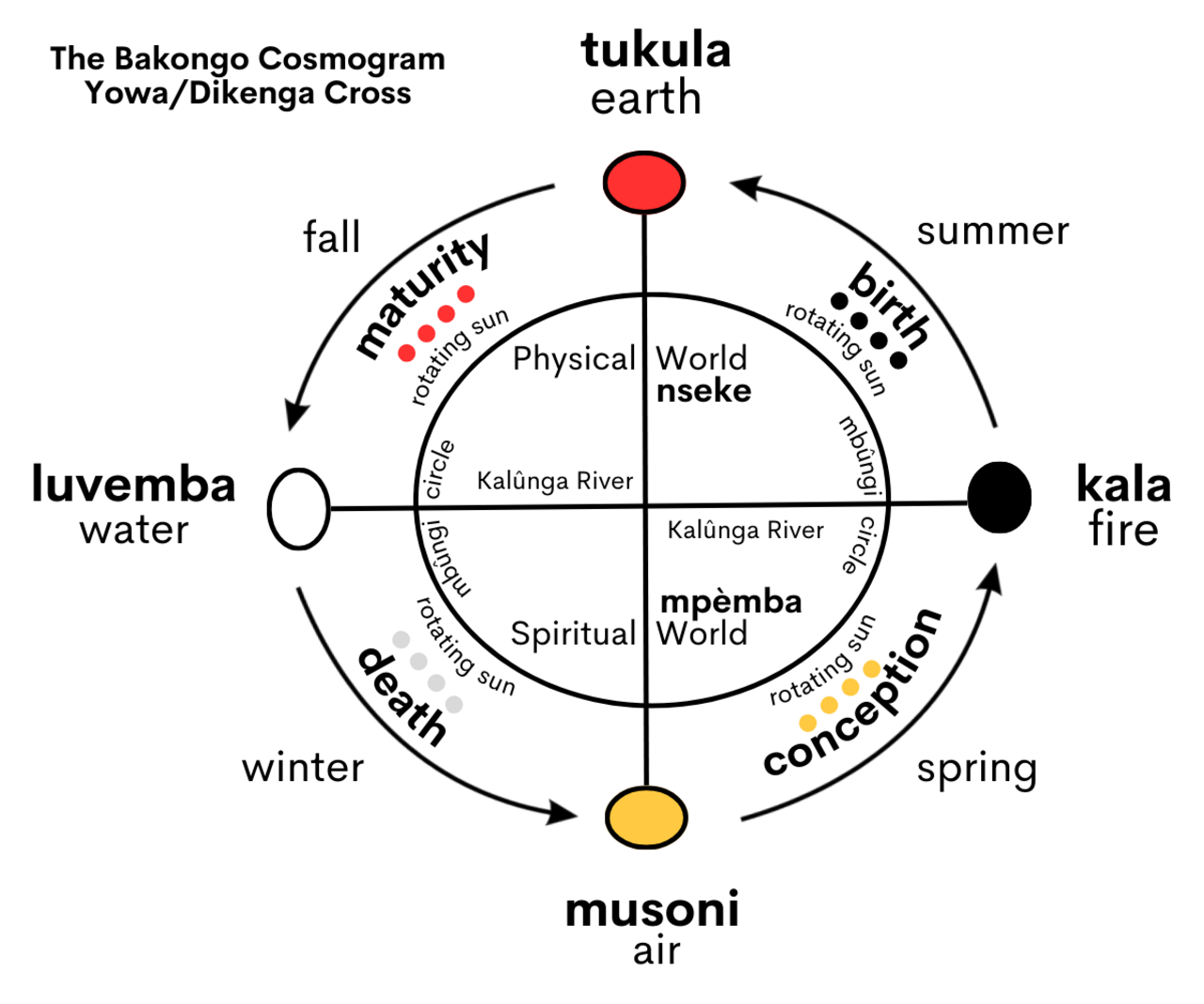
Gullah spirituality, especially in relation to the dream realm, is heavily influenced by Bakongo spiritual cosmology. This influence is due to the forced arrival of many Central African people from the Central African and Kongo region who were taken to the Americas, and specifically the Carolinas, during the transatlantic slave trade. Remnants of Kongo spirituality appear in ghost stories, baptisms, and religious iconography in the region. Within this spiritual system exists the Bakongo cosmogram, which illustrates the cycles of life and death. It is shown as a circular diagram that traces the seasons of life: conception, birth, maturation, and death. The line that divides the realm of the living and dead is referred to as the Kalunga line – the Kalunga river – where spirits cross into the realm of the dead from the living. In the Gullah dream practices I grew up with, the dream world is a space where the seasons and realms of the living and the dead intersect, communicate, and express themselves (author’s family oral history, Beaufort, South Carolina, ongoing).
The film Daughters of the Dust by Julie Dash (1991) is an excellent example of the relationship between the waking world and the spirit world within the Gullah community.5 A friend and I were once discussing how the film itself can be seen as a representation of the Kalunga line – the line between the living and the spirit world, or the world of the ancestors. Through its narration, we learn about spiritual practices related to the dream world in Gullah culture, such as placing a glass vessel of water under the bed to support dreaming, and writing letters to the spirit world and leaving them under the bed or pillow.
What I love about exploring this tension is acknowledging the importance of land and land-based spiritual practices in the development and evolution of Black cultural spiritual practices, yet the film leads me to question dispersion versus dissipation. The dispersal and displacement of a symbol, in the realm of dreams and spirit, does not have to cause a disconnect, a watering down, or a weakening.
The question of flying returns me to Toni Morrison’s Song of Solomon, which I read for the first time during my senior year of high school. Reading this text was life-changing, and I return to it time and time again. In high school, it was rare for me to be assigned and encounter literature in an academic context that offered such an incredible description and exploration of Black interiority, especially concerning spirituality, the dream world, and the lines between life and death.
“Guitar!” he shouted.
[…]
“Over here, brother man! Can you see me?” Milkman cupped his mouth with one hand and waved the other over his head.
“Here I am!”
[…]
“You want me? Huh? You want my life?”
[…]
“You want my life?”
[…]
“You need it? Here.” Without wiping away the tears, taking a deep breath, or even bending his knees – he leaped. As fleet and bright as a lodestar he wheeled toward Guitar and it did not matter which one of them would give up his ghost in the killing arms of his brother. For now he knew what Shalimar knew: If you surrendered to the air, you could ride it (Morrison 1977, p. 337).
Within this scene in Song of Solomon, Morrison explores ‘The People Who Could Fly’, an African American folk tale and children’s story based on the story of Igbo Landing. Igbo Landing is located on St. Simons Island, Georgia – approximately 90 minutes from where I was raised – where a mass resistance took place in May 1803. Around 75 captive Igbo people from modern-day Nigeria revolted, took control of their slave ship, and drowned themselves in the creek rather than submitting to slavery, while singing in their Indigenous language. Gullah culture passes the story down as “walking home on water”.
The story of Igbo Landing calls into question the many technologies used to escape slavery. It brings the physical living world and the spirit world into relation, holding liberation within a dangerous history of water, refusal, and return. In this context, flying does not describe an escape from history; it becomes a way of thinking about how histories of movement, displacement, and survival continue to shape dream worlds.
This returns me to the Kalunga line, the delicate threshold between the worlds of the living and the dead. Dreams can become a space of communication across waters, across histories, and across the geographic dispersals of the Black Diaspora. They can also hold the limits of what can be known or verified. The dream does not prove an ancestral connection, yet it can make a relationship felt and invite further listening.
Gullah relationship to flying – spiritual initiation and the dream world
During the era of slavery, Gullah people subscribed to a confluence of Christianity and Kongolese Indigenous spirituality, with contact with Christianity as early as 1650 through the arrival of Capuchin missionaries. Yet, while tens of thousands of Kongolese were baptised into Christianity, it is noted that the reasoning behind it was actually tied to Indigenous beliefs about water and salt as a means of protection:
“While the Kongolese had preexisting notions of the spiritual powers of water, no evidence suggests that they transferred their reverence for Simbi spirits onto the sprinkled water featured in the Catholic baptism, and European missionaries made no effort to encourage among their would-be converts any such connection. As a result, Kongolese villagers referred not to the cleansing power of water when describing baptism but to the power of the salt. In line with the general belief that evil people and spirits detested salt and would thus avoid a baptized person …” (Young 2007, p. 53).
Water was central to Gullah communities and initiation into the Praise House. Water was seen as both a barrier and a passage connecting two opposing yet complementary realms. The Praise House was a space that was central to community spirituality, politics, and governance for Black people on plantations in the Lowcountry6 during the era of slavery and beyond. Community decisions were made through Praise House participants, and it was also a space to seek not only spiritual healing and dream interpretation but community justice and political agency within the violently oppressive system of slavery. Within the Gullah community, secret societies and communal forums for airing grievances were spiritually based. Spirituality was essential in communal leadership, building trust and creating spaces of healing in the plantation context and beyond. Baptism was required to join the Praise House, and the process of becoming baptised was determined through a process referred to as “seeking”, which resembled Poro and Sande7 initiation rites in Sierra Leone, Liberia, and parts of Gambia.
People often went to spiritual seers or readers for dream interpretation. Whether one was prepared for this process often depended on the potential initiate’s dream state. An elder would determine, through dream symbols such as figures/persons within the dream, whether the dream was “bad” or “good” and, based on how the dreamer felt upon waking, whether they were prepared for the process. This is integral in understanding the role of the space of the dream world and political autonomy during the era of slavery within Gullah communities. In this historical context, I learnt dream interpretation and the lineage of dream symbols I currently work with in my dream work. Symbols are not static and do morph over time, geographic space, water, and individual make-up. Additionally, these methods of travel through the spirit world, initiation, and political negotiation are forms of technology – the Praise House, the dream states that allowed initiation – that created systems of community care and healing that can be seen beyond the era of slavery in contemporary Black Diaspora dream interpretation, symbols, and usage.
Dispersals through wind and water
Reflecting on the collective nature of dream spaces, and on the words of my grandmother and family friends, I think of Éduoard Glissant’s writing about landscape and the plantation as it relates to Black communities and the formation of creolised language and oral histories. Specifically, how language forms were codified and otherwise shaped among Black communities throughout the Americas during slavery, and the importance of Black oral traditions and literature in the plantation space and beyond.
An act of survival. In the silent universe of the Plantation, oral expression, the only form possible for the slaves, was discontinuously organised. As tales, proverbs, sayings, songs appeared – as much in the Creole-speaking world as elsewhere they bore the stamp of this discontinuity (Glissant 1990, p. 68).
Glissant describes plantation oral literature as a survival practice that emerges in fragments, through tales, proverbs, sayings, and songs (Glissant 1990, p. 69). Dream symbols also travel, gather, and change through dispersed forms of relation.
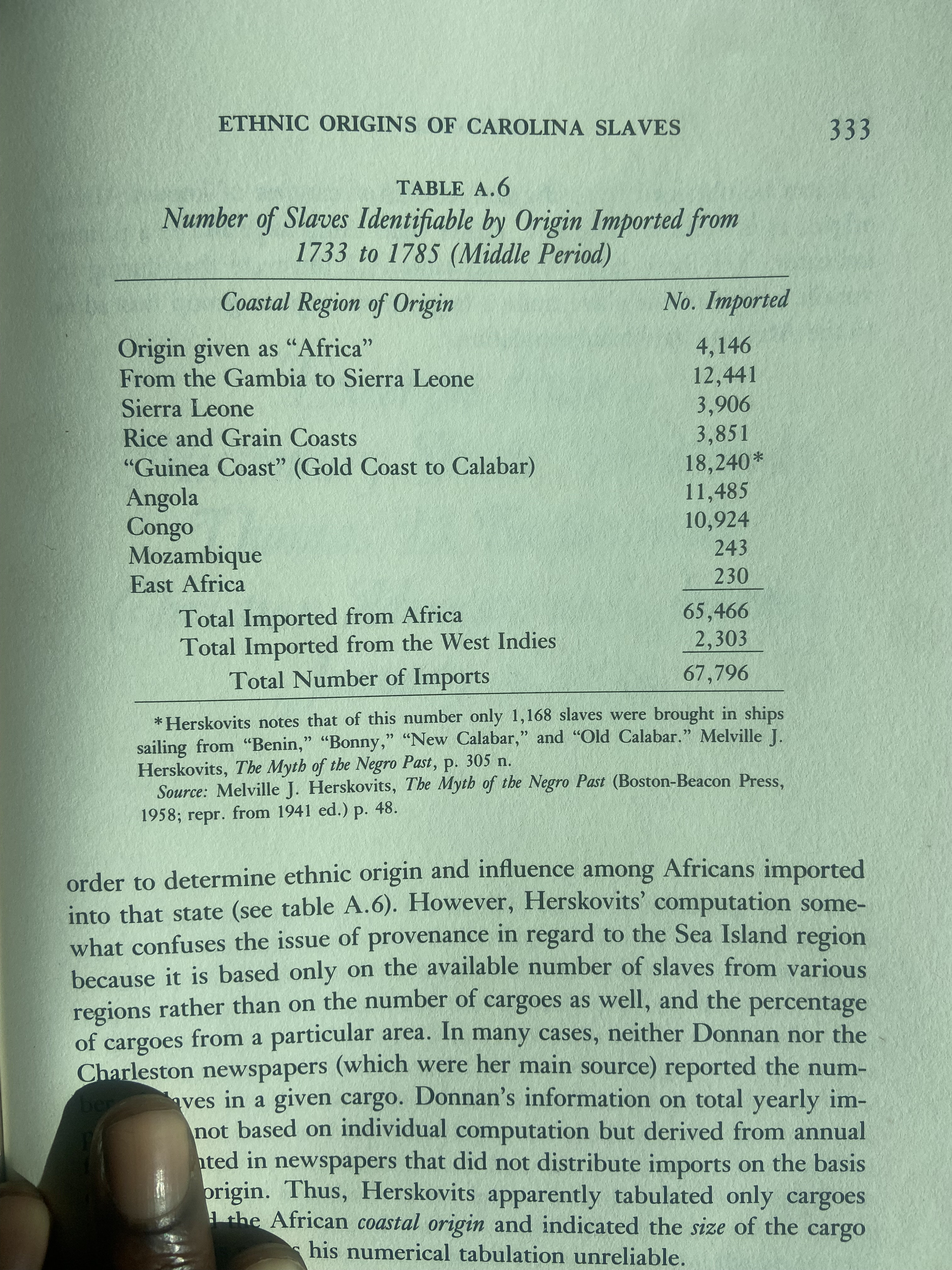
The dream world can be conceptualised as a creolised language within the Americas. Because of the history of the transatlantic slave trade, which involved the trafficking of African descendants both from the African continent to the Americas and within the Americas, dream symbols travelled and evolved in an expansive geographic space, and continue to do so. This evolution and creolisation grew from symbols that arrived from varying regions of Africa, then morphed as many Black Indigenous languages, spiritual practices, and dream-interpretation systems merged. The symbols and systems shift and adapt to patterns of migration and movement, merging with digital culture and shifts within what we consume while awake, and are then passed down communally.
‘Herbs for Dreams’ – herbalism workshops that support us in dream recall
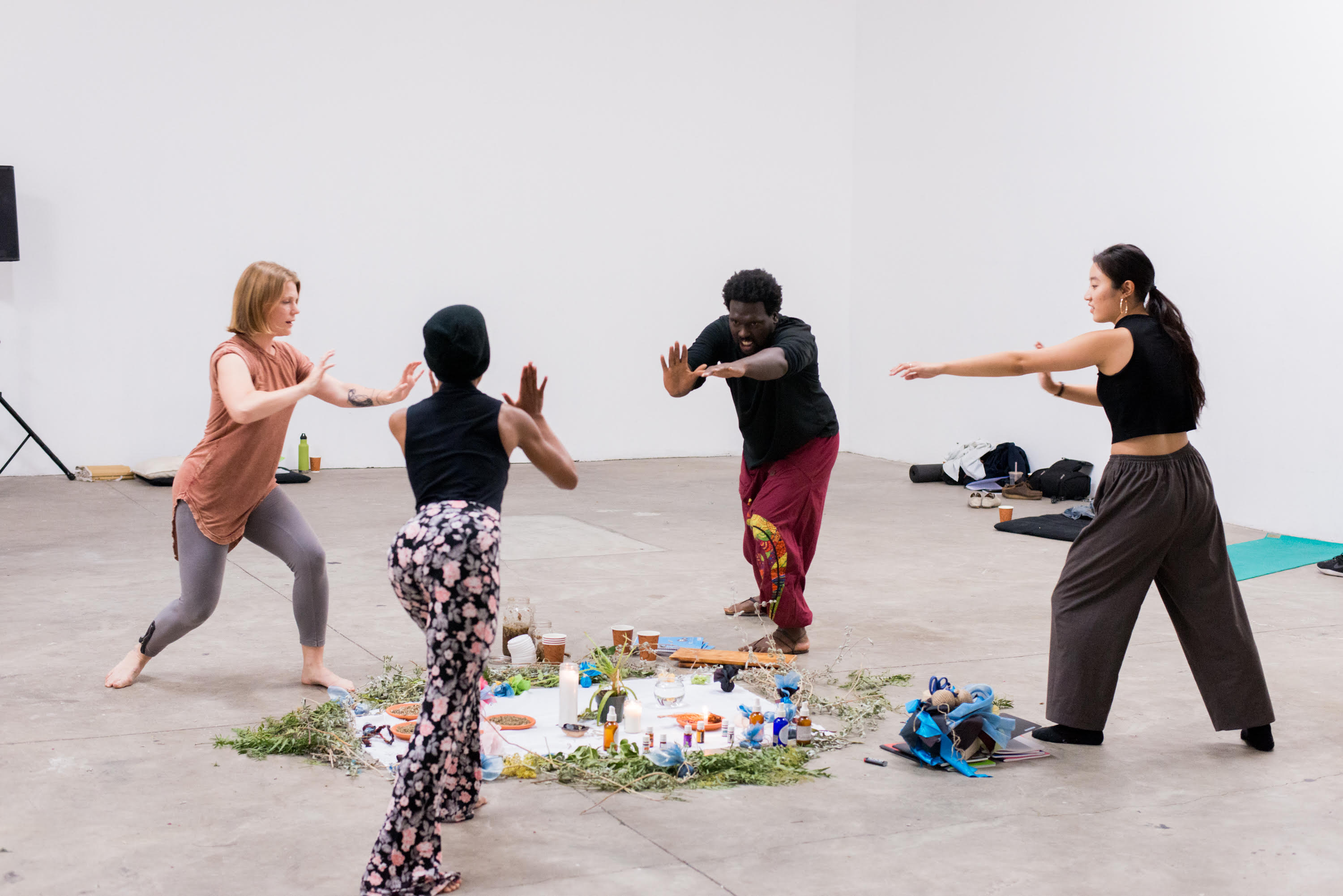
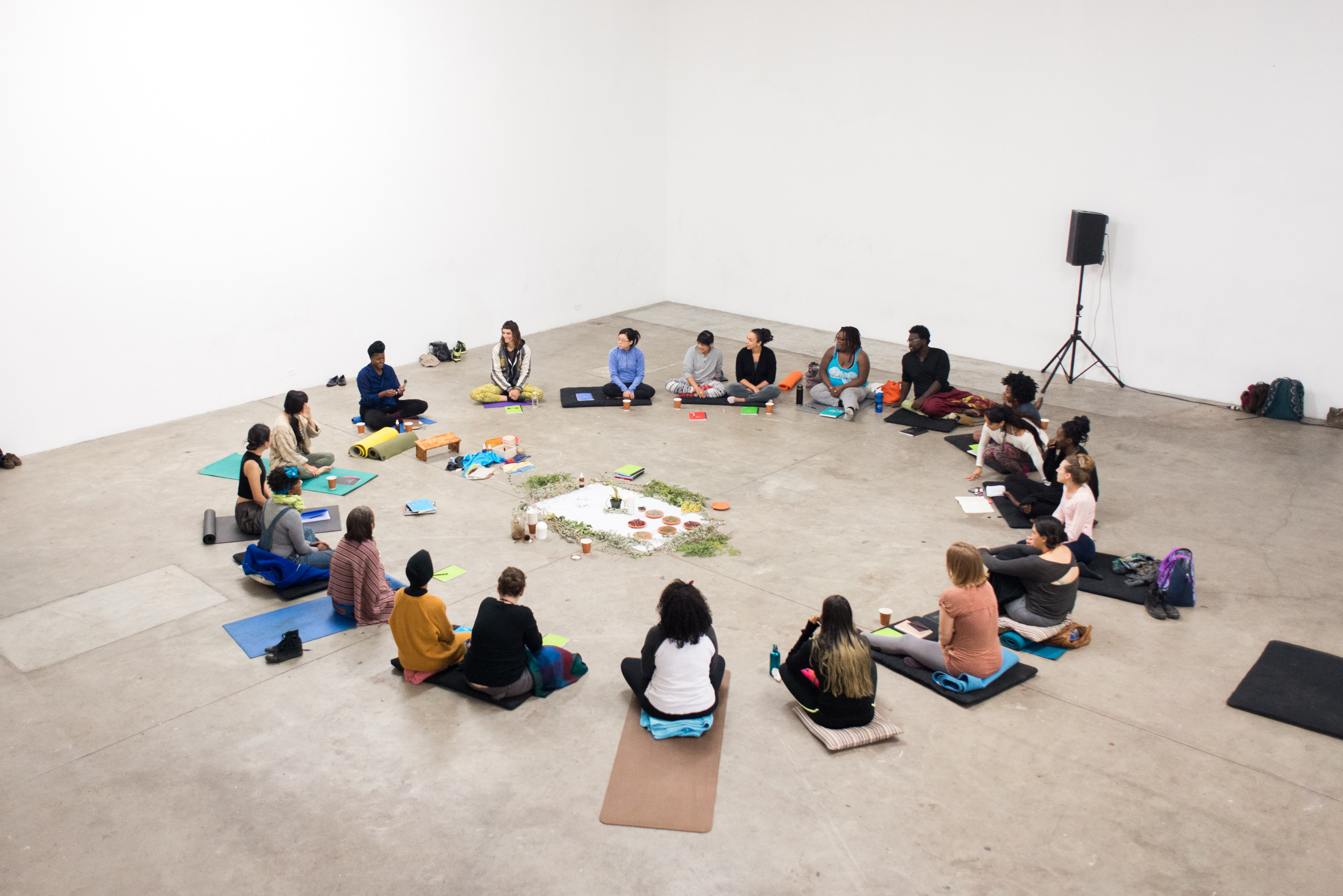
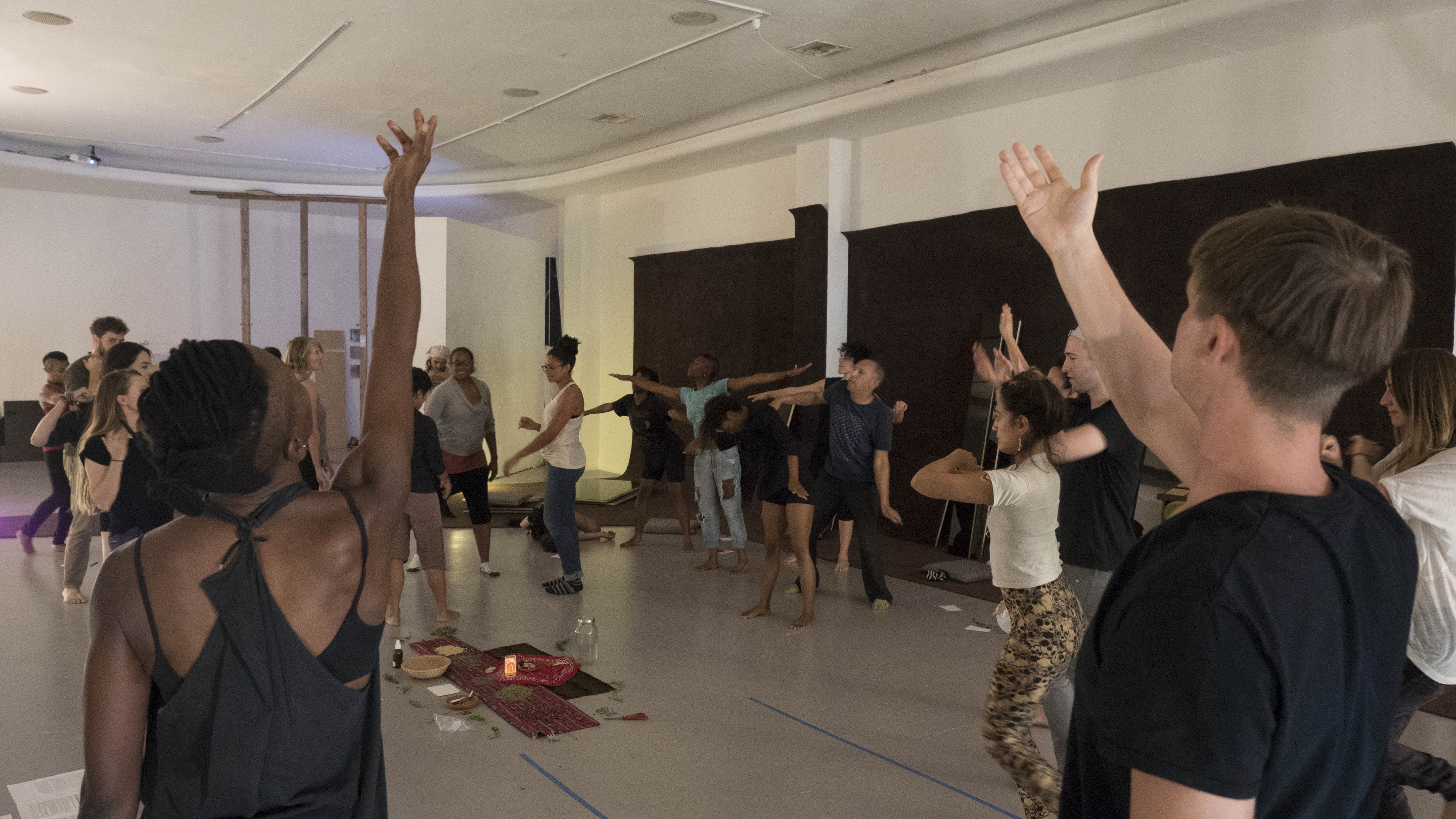
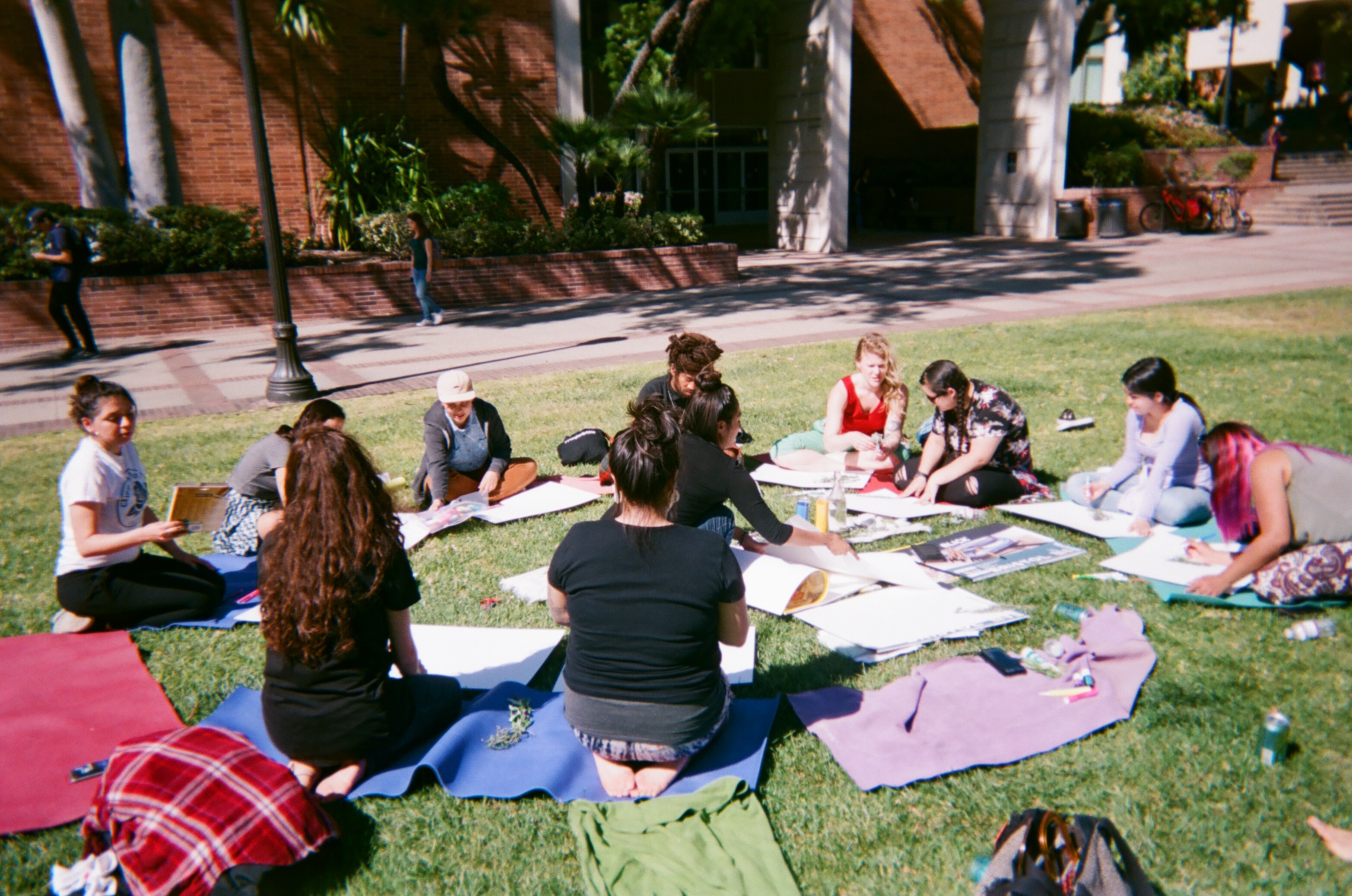
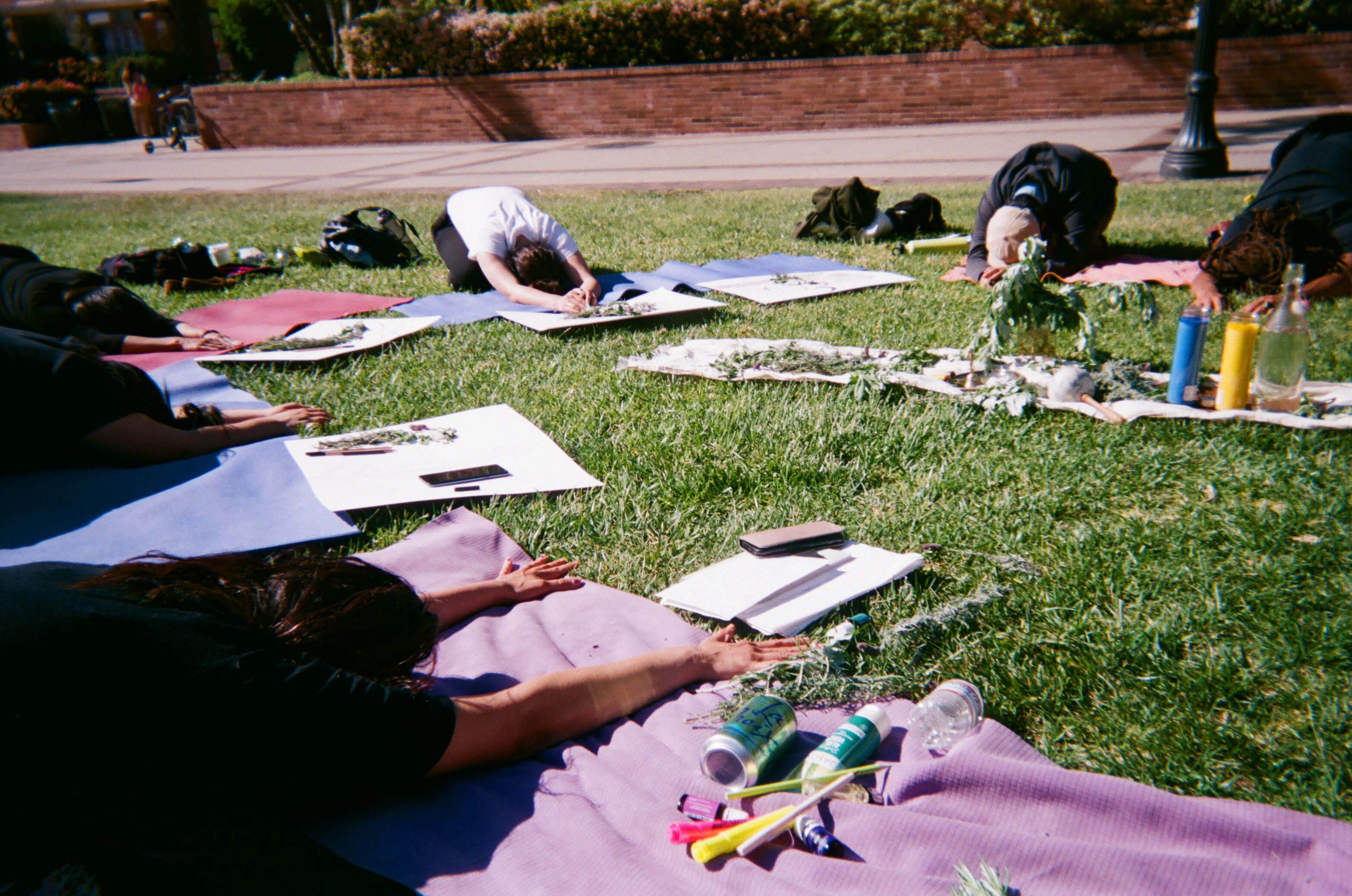
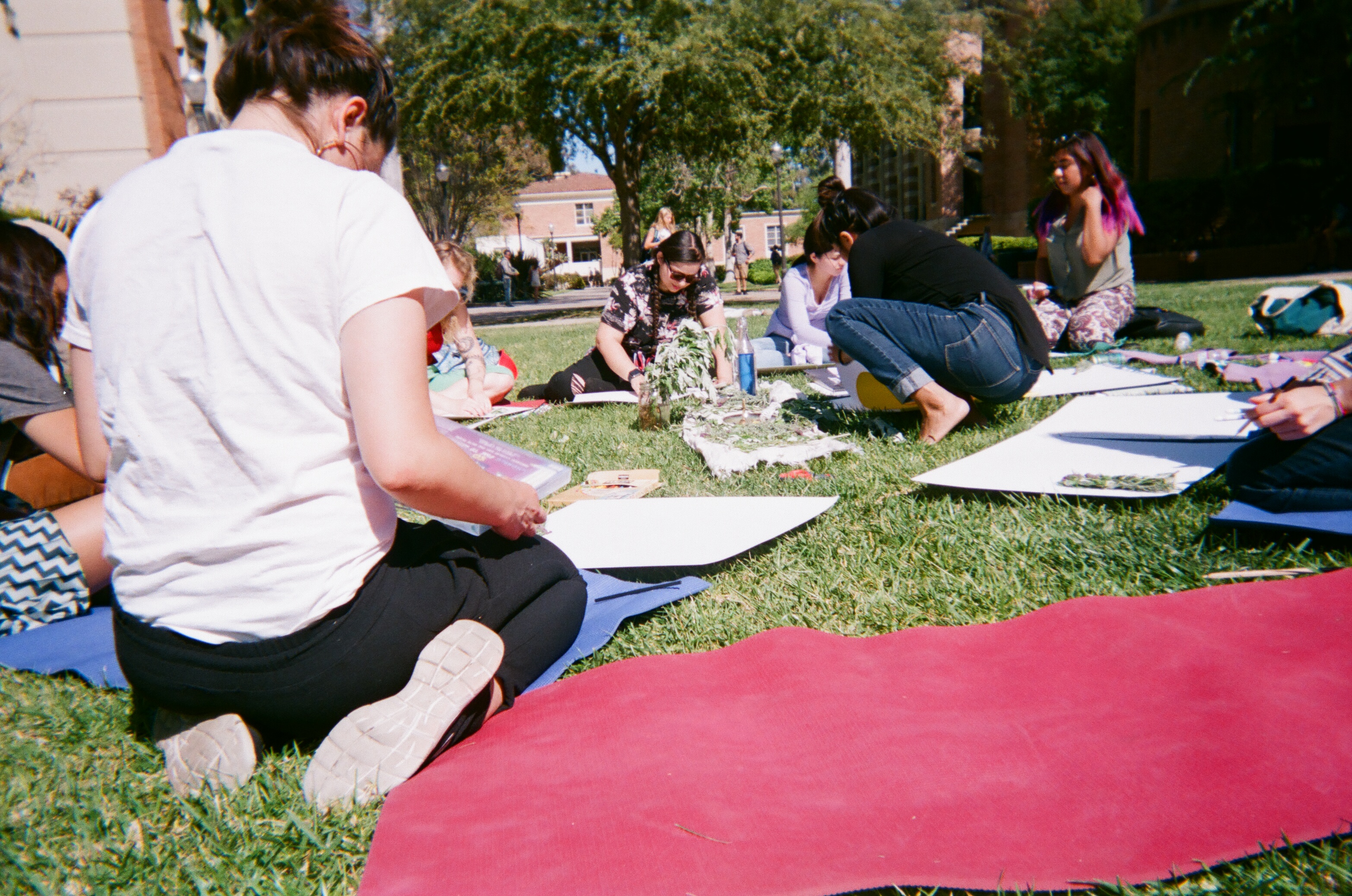
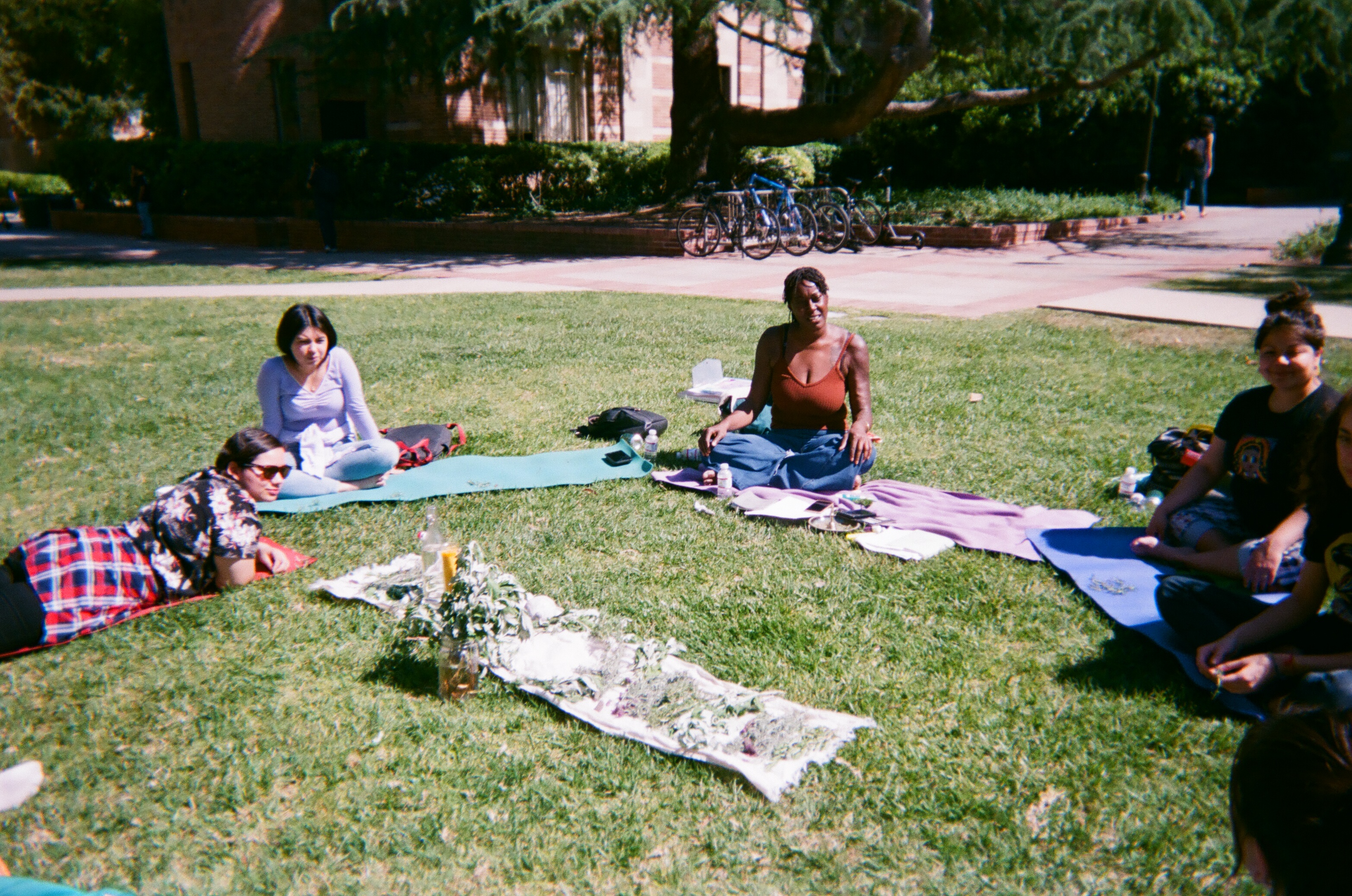
My relationship to dream work, interpretation, and Gullah heritage has deeply informed my herbalism practice. I facilitate herbalism workshops around dream work and host a dream hotline radio show. In ‘Herbs for Dreams’, we collectively make an altar at the start of the workshop before we begin talking about our dreams. We write and think about how we define rest for ourselves, practice somatic exercises to revisit dreams that we feel comfortable revisiting, and draw our dreams.8
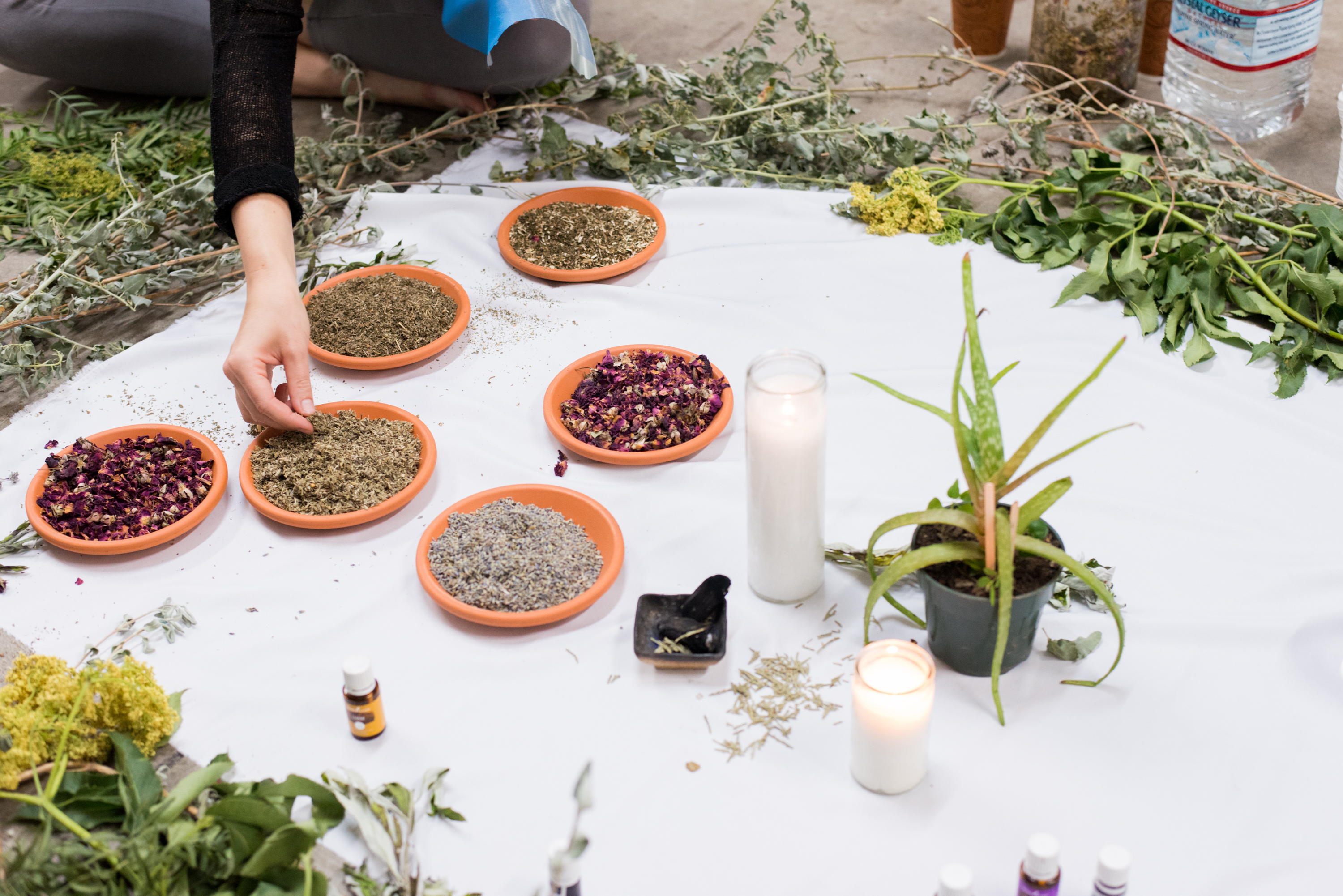
Herbalism work relating to the dream world is critical to my research because it explores how to connect with our local ecologies to tap into the ancestral knowledge and legacy of our dreams through collaboration with plant allies. My work connects ghost stories, the dream world, ancestral reverence, spiritual survival, and their connection to our local geographies and ecologies. I understand plants as beings in community with us. Dandelion, burdock, nettle and rosemary are plants I return to in dream practice. They accompany questions of digestion, grounding, protection, circulation and recall. Their longer stories, uses, and symbolic relations appear in Dream Portal, Section 4: ‘Plants for dreaming, and harvesting methods’.
Learning done in conversation with those near us
While in Los Angeles to co-facilitate a workshop about dreaming and uncasting the spell of white supremacy and capitalism with a friend and collaborator, we went to pick up herbs from a local healer and herbalist. When facilitating workshops, we co-create a herbal altar space where participants can place sacred items alongside the herbs. Throughout the workshop, participants can approach the altar to sit and meditate with the plants. Within the workshop, we also work with the plants by making herb bundles to support spell uncasting and dream work. See Dream Portal 4 for our connection to Dr Elena Esparza, and we learnt about rosemary.
Dream messages as keys to liberation
Jupiter
I once had a dream where I went to Jupiter. A friend I hadn’t seen in a while and I were catching up on the phone, and I suggested that since we hadn’t seen each other in so long and weren’t sure when we’d see one another again, we should try to meet up in the dream realm. She was open to the idea. As an adult, it felt exciting to explore a practice I’d done as a child with a current friend. My friend suggested we pick a common place to meet, one we both knew, and meditate on that space before going to sleep. We selected our location, continued our conversation, and then got off the phone.
That night I had a dream where I was in an amusement park line for a free-fall ride and, once on the ride, my friend and I – who I recognised energetically but was in the body of another friend – sat next to one another on the ride and blasted through layers of what seemed and felt like the core of the earth until we arrived at our location. When we arrived, they took us on a tour; four moons were in their new moon phase, and a Black elder led the way. We discovered that we went, or were possibly taken, to that planet to work for an elite group of judges, and to save money to bring back to Earth to support our families. There was a universal shortage of labour, and in the dream, this planet offered work contracts of up to ten years of arduous legal work, so you could save money to go back to your planet of origin and survive. With more time on that planet, we discovered that the contracts were incredibly hard to break or get out of, and we weren’t even sure they ever actually ended. Many people ended up staying, either working for an eternity or believing they'd been returned home, only to have their memories wiped so they would forget their place of origin. We ultimately found a way back home and a way to break our contract. Was this a memory? A processing of collective capitalist grief? A call to release the contracts we operate within in this broken system? Many questions emerged upon waking.
The dream illuminated how co-dreaming is a practice worth exploring well into adulthood, and that we have the capacity in our waking and dreaming worlds to co-dream, co-build, and collectively collect messages that can support us in resistance. I was struck by how my brain and spirit processed labour struggles in the dream realm, with the support of my co-dreaming counterpart, as we explored ideas of resource scarcity and greed on Earth. It also raised questions about what might unfold if governments and elites continue interacting with the earth in a colonial, extractive way that pushes us toward climate shifts, declining usable water, and the planet becoming uninhabitable.
Ancestor dream tailor
A recent dream. I dreamt of a house on the same street where I grew up. I was in the attic of the house, witnessing a scene from the era of slavery in the Americas. There was a Black man who was enslaved and was a talented tailor, and the white woman who was enslaving him also worked as a seamstress. She was jealous of his talents and wanted to have him killed. In addition to witnessing, I was able to loosen and unfasten his chains while she went to the bathroom. Upon waking from the dream, I assumed I was dreaming about an ancestor in South Carolina whose history and life I needed to learn more about and be present with. I also work in textiles, and my textile practice currently explores maroonage9 within marshes in South Carolina. I remembered his name in the dream, and took it as a symbol to speak with my family members, asking if they were familiar with the name while also searching for more information online.
Upon waking, I learnt that a historical figure with his name organised a slave rebellion in Bahia with Black men tailors. I was stunned that this person was a historical figure in a place where I am currently living, while in the dream his struggle was connected to my Gullah heritage in South Carolina. No known waking-world evidence suggests I am related to him. There are, however, geographic and historical ties between Brazil and the Carolinas through rice cultivation, intra-American routes of enslavement, and the movement of Central African people10 (Carney 2001; Slave Voyages n.d).
The historical ancestor dreams I had about the tailor return me to questions of flight, water, and psychic inheritance already held in Song of Solomon, as described earlier (Morrison 1977). Additionally, his uncertain relation returns me to an interview between Patricia Saunders and Saidiya Hartman. Hartman speaks of “psychic inheritance” in relation to the history and passage of slavery, a notion that feels connected to the dream space as a bridge to the realm of the dead, and a space of inheritance (Saunders 2008, p. 8):
“You raise an important point that is connected to what I think is a crucial question: what does it mean to have this psychic inheritance of an experience for which one has no memory, where people are still living in the temporal space of being an ex-slave? We don’t possess memories of slavery ourselves and that coupled with the incredible absence of witnesses of the experience, particularly in terms of the slave trade, is part of the whole displacement from Africa … So for me the book is a meditation on memory, on memory and history, written in the form of a travelogue. But the journey through time and space is a device, a vehicle, a formal means to exist in the physical landscape of slavery and to embody that history and to carry it. And that explains the significant difference between what I do and what a ‘guild historian’ does…” (Hartman cited in Saunders 2008, p. 8)
Dream interpretation, privacy and AI
How do dreams remain private when we incorporate AI into dream analysis and interpretation? I am curious about the dream space not only as a means to connect ancestrally but as a refuge to process our day-to-day lives and navigate an increasingly surveilled living experience. As AI technology grows and neuroscience research explores the dream space, the sacredness of our dream world sometimes seems at risk of non-consensual exposure. As the use of AI chatbots for psychological comfort, relational understanding, and spiritual guidance increases, despite research showing connections leading to psychosis, tracking, and lack of privacy, I question what this means for dreams. What does it mean to put collective, ancestral dream symbols and messages into pattern-tracking systems that are also used for military operations? The dream space is subjective and overflowing with personal symbols that require relationship-building and personal tracking of when symbols appear to us and what they mean. The dream space is filled with symbols that rely on our relationship to the land, the cities we live in, our neighbours, and the people next to us, and there is no replacement for that. An integral part of dream work and interpretation, and of assessing the symbols that come to us through land, lineage, dirt, water, blood, and non-blood ancestors, is looking within and to those around us. I have had many dreams that are not necessarily direct messages for me but are clear messages to pass on to others.
A life saving dream
I once had a dream about a family member, a cousin who had passed away. Within the dream, she touched me while asking about my mother. In Gullah dream practice, I was taught by my grandmother and mother not to allow the dead to touch me within the dream space. And initially, upon waking, I was really worried about receiving that touch, and also the state of my grandmother’s health. I then reflected that she had asked about my mother. I knew that either way I needed to call and check on my mother and grandmother, and when I called my mother to ask about how she was and if my grandmother was alright, she revealed to me that her blood sugar levels were really low, and she feared she was about to enter a diabetic coma. At the end of the call, she thanked God that I had called, stating that if I hadn’t, she may have entered into a coma, with no one around to wake her or give her the insulin needed to be life-saving in that moment. My intuition and curiosity about the dream led me to reach out upon waking (Bee family oral history, 2004).
Machine interpretation and pattern recognition can narrow the space for such important curiosity, self-reflection, and intuition when they become a primary place for holding deeply personal, communal, and ancestral material. I propose that we instead commit to building out and deepening our own personal pattern recognition and community and collective symbol databases. We can do it as we work introspectively, but it doesn’t have to be done alone; it can be done in community. Community can be one friend, one neighbour, one person you’ve spoken with dreams about. Community can be a relationship with a place in nature or outside that you like to go to that makes you feel most like yourself. It can happen slowly, over time. Elders are essential to this work. The very young are essential to this work.
When building a database of dream archives and pattern recognition, incorporating geography- the lands we are on, the people we are sleeping in the same space with and next to, the moon, the season, the date- can all be supportive in being able to understand the meaning of symbols. When reflecting on a dream, it is important to annotate not only the symbols within the dream and the visuals that were present, but to also ask: Was there a smell? Was anything from my waking present? How did I feel upon waking? What do I remember, what did I forget or what feels hard to recall but I still somehow feel in my body? What do I wish to know more about that appeared in the space? What if each character in the dream was me? What then, am I telling myself about my environment and my interiority?
I began a project a few years ago called the dream support hotline. The project is an experimental sound and radio project for Black people to process and share their sleep dreams. Guests call in, leave a dream message, and I interpret the dreams and record it in a radio show format, alongside music. The show creates a space where callers can work through their dreams, and listeners can gain insight into their own dream space through the interpretations shared (author’s project, 2021–; see Ethics Statement). The work also explores ways to build one’s own personal dream archive.11
AI and examining historical vs contemporary technological means of dream intrusion
I am curious about the dream space as a means to connect ancestrally, as a refuge to process day-to-day life, and as a place shaped by an increasingly surveilled living experience. AI chatbot use for dream interpretation is one current entry point into these questions. It sits within a wider field of AI infrastructures that extract energy, water, minerals, labour, attention, images, language, and personal relation. Dreams offer practices for remaining in relation to what these systems separate into data: land, body, memory, spirit, community, and the material conditions of communication.
There is convenience and perceived connection with the use of an AI chatbot to interpret a dream, for advice, for clarification, when self-doubt arises, or when loneliness is present. Sometimes, you feel the absence of someone to call. The reality is that many of us feel like we don’t have anyone to call in our deepest moments of despair and desire for connection. I have been in a position where, despite having dear friends and loved ones, I have no one to call, talk to, and reach out to in the moment of needing dream support. And for this reason, I can understand a desire, or even a practical need, to turn to AI for support in unpacking something that feels so personal, immediate, and urgent as the dream space. Yet we must remember the importance (for our minds, intuition, and connection with others) of building our own systems of pattern recognition,12 although they may take longer, because they build and fuel self-trust. I find that in these moments that writing a dream down or recording audio can provide an immediate release and a space to return to later with support.
As a student of tarot for approximately 18 years, I learned each card by reading books, internet articles, and giving readings to my friends and myself. Today, I still find new meaning in the cards’ symbolism and imagery, and in how my intuition converses with them. I have experimented with doing tarot readings manually and plugging the results into AI chatbots to see how they interpret symbolism based on their database of interpretations and symbols. While there have been interesting insights gained and new perspectives on how to use the cards, the use of chatbots for spiritual guidance and interpretation can create opposition with spiritual inquiry when it encourages habitual return to a system designed around isolation.13
The way in which chatbots are designed towards engagement has an addictive quality, and clinicians have reported cases in which intensive chatbot interactions deepened isolation or anxiety for some users (Valentino-DeVries and Hill 2026).14 Spiritual use of chatbots directly opposes trusting and relying on intuition by creating a habit-forming routine of looking outside oneself for messages that arrive through community, humans, and inner understanding.
Dreams function similarly; it is not odd to look outside of oneself for support with dreams. Dream interpreters are at the centre of many Diaspora and African Indigenous healing communities. The difference is that these human practitioners often sit with a client and offer divinatory tools that lead them back to themselves, questioning and pointing to how certain symbols received within the dream space are specific to their lineage and land; the design of this sort of consultation is not rooted in a habit-forming relationship that takes one out of the community aspect of interpretation and further into isolation. That isn’t to say that corruption or abuse of clients cannot happen within spiritual spaces, but these spaces are historically set up for community accountability and spiritual understanding much more so than a space of addictive or habitual return. Returning to the initiatory process of the Gullah Praise House, initiates knew whether it was their time to join the Praise House and be baptised through the dream state. Baptism consisted of going out into nature, or being with oneself (in the context of slavery, when one wasn’t afforded privacy, they went to be with themselves in ways such as being quiet in the family home after work, or other means of finding internal connection within that oppressive system).15 Essentially, the process of initiation required internal reflection, and then integration back within the community, not habitual isolatory conversation with a chatbot (Creel 1982, p. 287). Also, considering spirituality, the question of which spirit we engage when plugging spiritually and community-sensitive material into the chatbot is critical.
The internet and data delivery are made possible by bundling many small fibres within cables that rest on the ocean floor between continents, across oceans. Many fibre-optic cables between Europe, Africa, and North America retrace the routes of the transatlantic slave trade (Jahajeeah 2024). This overlap of historical routes tied to slavery, and routes that fuel our information and data delivery, asks us to consider how contemporary infrastructures move across landscapes and waters already marked by violence. Many sites in our contemporary world are constructed on top of violence, and this is no different. With this in mind, and with the dream realm’s focus on connecting with spirits, I wonder about the spirits of the people who were dropped overboard on these very routes where our internet cables lie.
“The amount of time it takes for a substance to enter the ocean and then leave the ocean is called residence time. Human blood is salty, and sodium, Gardulski tells me, has a residence time of 260 million years. And what happens to the energy that is produced in the waters? It continues cycling like atoms in residence time. We, Black people, exist in the residence time of the wake ...” (Sharpe 2016, pg. 37)
Considering what happens to the energy of the waters and the people violently thrown over, the importance of water in dream interpretation, dream and spirit connection, and Gullah and Black ancestral spiritual practices, there seems to be a clear connection to reaching for a technology such as an internet-driven AI chatbot to interpret dreams and this violent history. This directly opposes ancestral dreaming systems rooted in nature and community. While reflecting on these sites, the dream space, the community space (such as the Praise House), dream interpretation, and these routes, I think about what communications come through that may be beyond the code when engaging chatbots, and what gaps may be filled by spirits unknown.
When engaging chatbots with spiritually sensitive material, consider the historical significance of how the data moves to and ultimately through us, and what routes and histories these cables and data come into contact with. It is important to consider our future: data centres– which chatbots, internet servers, and artificial intelligence systems rely on – are the cause of extreme ecological decline. At the core of the dream work discussed is the importance of water and connection to natural elements.
Data centres are well documented to strain rural water supplies because they require massive amounts of water to cool the servers that run and store the data that makes chatbot use possible. A recent zoning ordinance was passed in Colleton County, South Carolina, also known as the ACE Basin, which would make it easier for data centres to begin construction in the area.17 The ACE Basin is not only one of the largest wetland areas in the southeastern United States, but also an integral part of Gullah spiritual history and community. (Hampton County Historical Society 2026) (SC Department of Natural Resources n.d.). The majority of the rice plantations in South Carolina were located in Colleton County, South Carolina, as is the Combahee River, where Harriet Tubman led a strategic military raid, which led to the liberation of over 700 enslaved Black people (Smithsonian, n.d.). Placing a data centre here would create an ecological crisis in an area central to Black ancestral dream technology. Research shows that data centres emit massive noise and light pollution, disrupting the circadian rhythms of nearby humans and wildlife. How do these centres impact how we sleep…how we dream?
Conclusion: Dream waters, Kalunga line, herbal overlaps
Dream interpretation is an ancestral technology, deepened and expanded through community and self-reflection, rendering the dream space both communal and private. The dream world provides a space to connect with the histories of the land we live on, the people who have traversed these lands, and our ancestral lineages. It is a non-neutral space where we can negotiate communal and political inclusion, protect ourselves from harm, and send messages to others. Within the dream space, we can collectively process the symbols, messages, ephemera, and histories that come to us, and how those symbols evolve across space, time, and migration patterns.
Dreaming and dream interpretation are forms of Indigenous knowledge. Community-driven relationships to dreaming lay the foundation for building out and deepening systems of personal pattern recognition and community and collective symbol databases. In the context of the Gullah Praise House, the dream space was one of liberation, supporting initiates as they were embraced into spiritual and community guidance (Creel 1988). Intentionally building these systems, in small and large ways, re-establishes our connections to one another and can support us in working through how we conceptualise building trust, negotiating communal accountability, care, and interpersonal politics, even if only with one other person outside of ourselves.
Dreaming and dream symbols urge us to be together with one another and the land to process the messages we receive. They lead us into deeper self-connection and connection with others, while AI chatbots for dream interpretation push us into isolation. As more studies about AI psychosis induced by long periods of interaction with chatbots in isolation emerge, chatbots prove to be an unsafe space to process spiritual material (Valentino-DeVries and Hill 2026). Heavy reliance on machine interpretation and pattern recognition, such as AI, for such deeply personal, community and ancestral work is detrimental to our curiosity, self-reflection and intuition. So too is the heavy reliance on water: water is central to Bakongo and Black Diaspora Indigenous cosmologies about the spiritual world and the veils between the living and the dead. The centres that drive and power these platforms cause deep ecological crises and water precarity, the very things we not only need to survive but that are at the centre of the spirituality of dreams.
People looking to AI chatbots for dream interpretation speak to an ongoing longing to understand this space that is individual, collective, spiritual, and communal in many ways. We want to understand what these messages mean, who they are from, and how they arrived, and that ongoing questioning creates space for us to expand on and build new pathways to archive, connect symbols, and be with the water of our dreams.
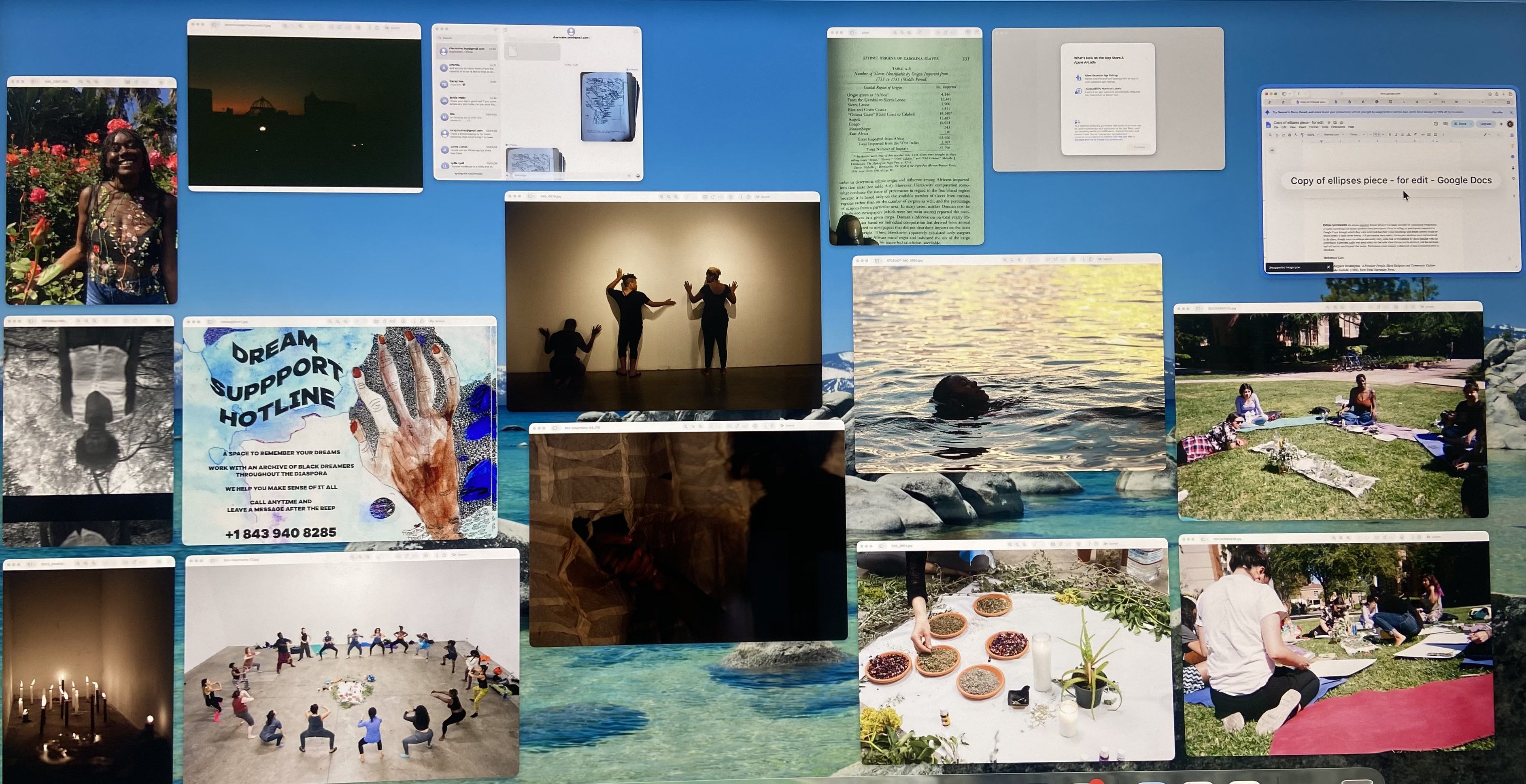
Ethics Statement: the dream support hotline project was made possible by consensual, informed submissions of audio recordings and dream symbols from participants. Before calling in, participants completed a Google Form informing them that their voice recordings and dream content would be shared in a radio show format. All participants were adults. Participant identities were not disclosed in the show, though voice recordings inherently carry some risk of recognition by those familiar with the contributor. Submitted audio was used solely for the radio show format and its archive, and has not been and will not be used beyond that scope. Participants may request withdrawal of their submission before broadcast.